

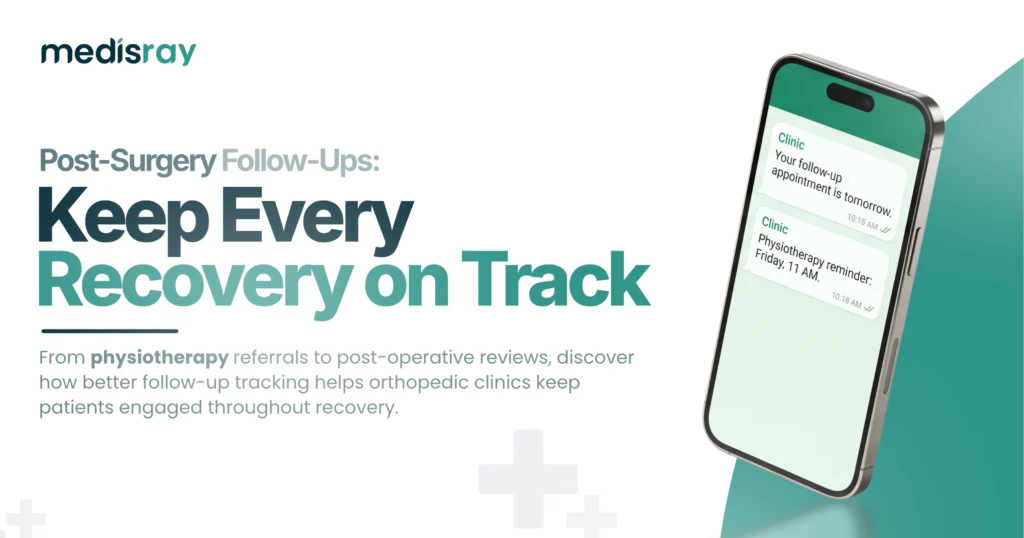
In orthopedics, the surgery is only half the job; recovery is the other half, and it depends entirely on the patient coming back. Post-operative reviews, physiotherapy sessions and rehabilitation check-ins are where a good outcome is won or lost, yet these are exactly the steps that slip when they are tracked by memory and loose notes. Post surgery follow up software fixes this by keeping every review, referral and rehab session visible and prompted, so no patient falls through the gap after they leave the operating table. This guide explains why follow-up is where orthopedic recovery succeeds or fails, how tracking referrals and reviews protects outcomes, and what to look for so your patients complete the recovery their surgery set up.
Why Follow-Up Is Where Recovery Succeeds or Fails
A successful operation can still lead to a poor outcome if the follow-up falls apart. Bone and joint recovery depends on a sequence of reviews to confirm healing, physiotherapy to restore function, and rehabilitation to rebuild strength, often over weeks or months. Each step builds on the last, and a patient who stops coming part-way through can undo much of what the surgery achieved. This is the uncomfortable truth of orthopedic care: the operation is a single event, but recovery is a long journey, and the journey is where patients are most likely to drift away. Protecting that journey is as important to the outcome as the procedure itself.
The Risk of Tracking Recovery by Memory
In many clinics, post-operative follow-up lives in the surgeon’s memory and a patient’s paper card, and both fail under a busy schedule. A review that should have been booked is forgotten. A physiotherapy referral is made verbally and never confirmed. A patient who misses a session is not noticed until much later, if at all. None of these failures is dramatic on the day, which is why they go unnoticed, but together they are how recovery quietly breaks down. Relying on memory to manage a months-long, multi-step recovery across many patients is simply asking too much of it, and the patients who slip through are invisible until the outcome suffers.
What Post-Surgery Follow-Up Software Tracks
Good follow-up software turns a scattered recovery into a visible, prompted plan. Typically it:
- Schedules post-operative reviews and reminds the patient to attend each one.
- Tracks physiotherapy referrals, so a referral made is a referral followed, not forgotten.
- Follows rehabilitation progress across the sessions recovery depends on.
- Flags patients who miss a step, so a slip is caught early rather than discovered late.
- Keeps the whole recovery in the record, alongside the surgical notes and imaging.
With this in place, you can see at a glance where every post-operative patient is in their recovery, and act before anyone drifts away.
Physiotherapy Referrals That Actually Happen
A referral to physiotherapy is only useful if the patient actually starts and continues it, and that is where informal referrals break down. Software that records the referral, tracks whether the patient began, and keeps physiotherapy progress visible closes the gap between “I referred them” and “they are doing the rehab.” For orthopedic recovery, where physiotherapy is often central to regaining function, this matters enormously. A referral that is tracked becomes part of the managed recovery; a referral that is merely mentioned too often evaporates, taking part of the patient’s recovery with it. Making referrals visible and followed is one of the highest-value things this software does.
Catching the Patient Who Goes Quiet
The most dangerous patient in orthopedic recovery is the one who simply stops coming, because nothing in a manual system flags their absence until it is too late. Software changes this by making a missed review or rehab session visible, so you can reach out and bring the patient back before a small setback becomes a permanent one. This early warning is what turns follow-up from a passive hope that patients return into an active system that notices when they do not. For recovery, catching the quiet patient early is often the difference between a good outcome and a disappointing one, and it is exactly what memory-based tracking cannot do.
Keeping Recovery Connected to the Whole Record
Follow-up tracking works best when it sits alongside the rest of the orthopedic record, not in a separate list. When reviews, referrals and rehab progress live with the surgical notes and the patient’s imaging, you see the complete recovery picture in one place, which supports better decisions at each review. The imaging side of that connected record is covered in our guide on keeping imaging kept in the patient record, and the wider tool that houses it all is covered in our guide to orthopedic practice management software. Follow-up is one thread of a connected record, and it is strongest when woven in with the others.
Reminders Do the Chasing for You
The reason follow-up slips in busy clinics is that keeping it on track depends on someone remembering to chase each patient, and that does not scale. Automated reminders solve this, prompting patients about their next review or rehab session without your staff making a call for each one. Consistent, automatic prompts are what actually keep recovery on schedule, because they run every time rather than only when someone has a spare moment. Letting the software do the chasing frees your team and, more importantly, means fewer patients drift away from a recovery that was going well until the reminders stopped.
Give Patients a Clear Picture of Their Recovery
There is a patient-side benefit to tracked follow-up worth naming. When a patient can see their recovery as a clear plan, the reviews ahead, the physiotherapy scheduled, the milestones to reach, they understand what is expected of them and are more likely to stay engaged with it. A recovery that feels like a vague “come back if it hurts” is easy to drift away from; one laid out as a defined path, with reminders along the way, keeps the patient committed. Software that both tracks the recovery for you and makes it visible to the patient turns follow-up from something you chase into something you share. An engaged patient who understands their rehab is far more likely to complete it, which is exactly the outcome the whole system is designed to protect.
Protect the Recovery Your Surgery Started
In orthopedics, a good outcome is built as much in the follow-up as in the operating theatre, and follow-up is exactly where patients slip when it is tracked by memory. Post surgery follow up software protects that recovery by scheduling and reminding reviews, tracking physiotherapy referrals so they actually happen, following rehabilitation, and flagging the patients who go quiet before a setback becomes permanent. Keep the whole journey visible and prompted, and far more of your patients complete the recovery their surgery set up. That continuity is not administrative housekeeping; it is a core part of good orthopedic care.
If you want every post-operative patient’s recovery tracked and nobody lost after surgery, Medisray for orthopedic clinics schedules and reminds reviews, tracks physiotherapy referrals and rehab, and flags patients who miss a step, all in one connected record. Protect the outcomes your surgery earns. Try Medisray free or book a demo, and give every recovery the follow-through it needs.
Frequently Asked Questions
What is post-surgery follow-up software?
It is software that tracks an orthopedic patient’s recovery after surgery, scheduling and reminding reviews, tracking physiotherapy referrals and rehabilitation, and flagging patients who miss a step, so no one falls through.
Why do orthopedic patients miss follow-up appointments?
Often because nothing reminds them, especially for reviews and rehab sessions weeks ahead. In manual systems a missed step is not noticed until much later, which software prevents with reminders and flags.
How does software track physiotherapy referrals?
It records the referral, tracks whether the patient started, and keeps physiotherapy progress visible, closing the gap between a referral being made and the patient actually doing the rehab.
Why is follow-up so important after orthopedic surgery? Because recovery depends on a sequence of reviews, physiotherapy and rehabilitation. A patient who stops coming part-way can undo much of what the surgery achieved, so completing follow-up protects the outcome.
How do I stop post-operative patients from dropping off?
Use software that schedules reviews, sends automated reminders, tracks referrals and rehab, and flags patients who miss a step, so you can reach out and bring them back before a setback becomes permanent.
Can follow-up tracking be part of my main patient record?
Yes, and it works best there. When reviews, referrals and rehab progress sit with the surgical notes and imaging, you see the full recovery picture in one place for better decisions.
Does reminder automation really improve recovery?
Yes. Automated reminders prompt patients about every review and rehab session without staff chasing each one, and because they run consistently, far fewer patients drift away from a recovery that was on track.
Is follow-up software useful for a solo orthopedic surgeon?
Yes, often most of all, since a solo surgeon has no team to track recovery manually. The software becomes the reliable memory that keeps every patient’s follow-up on schedule.