

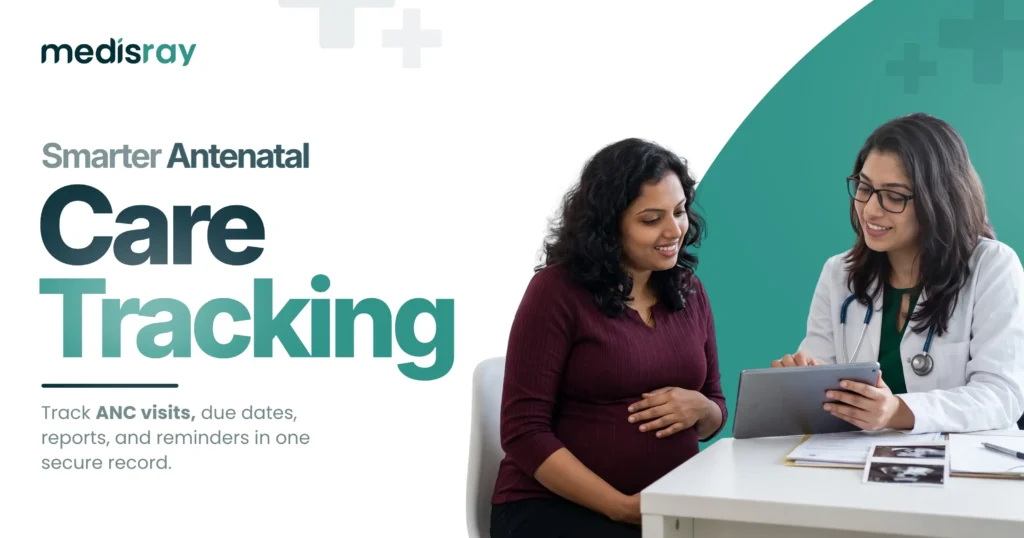
Antenatal care is one of the longest, most important journeys in medicine, a series of linked visits stretched across roughly nine months, where the timing of each check matters. On paper cards, it is far too easy for a visit to be missed, a due date to be miscalculated, or a result to be lost between appointments. Antenatal care software keeps the whole pregnancy in one place, tracking each ANC visit, the estimated due date, and what is due at every stage, so nothing slips. This guide explains how digital antenatal tracking works, why it is safer and clearer than paper for both you and the mother, and what to look for so every pregnancy in your care stays on schedule from the first visit to delivery.
General information for practitioners; use your clinical judgement and current antenatal guidelines.
Why Antenatal Care Is Hard to Track on Paper
A pregnancy is not one appointment; it is a planned sequence of visits, tests and milestones over months, and each one builds on the last. On a paper card, all of that depends on the card being present, legible, and correctly updated every time, which fails easily in a busy clinic. A card can be forgotten at home, a due date can be miscalculated by hand, a visit can slip because nothing flagged it, and a scan result can be filed loose and lost. None of these are rare, and each one weakens the continuity that safe antenatal care depends on. The sequence is exactly what paper handles worst.
What Antenatal Care Software Does
Antenatal care software turns that scattered paper trail into one clear, connected timeline for each expectant mother. Typically it:
- Tracks every ANC visit with its findings, in date order, so the whole pregnancy is visible at a glance.
- Calculates and displays the estimated due date, removing manual errors.
- Shows what is due at each stage, so scheduled checks are not missed.
- Stores scan and lab reports against the record, not on loose paper.
- Prompts the next visit, so the schedule keeps moving.
Instead of reconstructing a pregnancy from a card and memory, you open the record and see the complete, ordered story.
Due Dates You Can Trust
Getting the estimated due date right, and keeping it visible, matters throughout the pregnancy, because so much of the schedule keys off it. Calculating it by hand invites error, and a wrong date can misalign the whole plan. Software that computes the due date and displays it on the record removes that risk and keeps everyone working from the same reference. It is a small feature with an outsized effect on how well the rest of the care stays on track, and it saves you recalculating at every visit.
Reminders That Keep Mothers Coming Back
The best antenatal plan only works if the mother attends each visit, and life, distance and forgetfulness get in the way. Automated reminders are the safeguard, gently prompting the next ANC visit so gaps do not open in care that is meant to be continuous. Because the subject is sensitive, reminders should be clear, discreet and respectful of the patient’s contact preferences. Our complete guide to WhatsApp appointment reminders covers how to send these well. Tracking tells you who is due; reminders make sure they come in.
Keeping Reports in the Record, Not on Loose Paper
Antenatal care generates a steady stream of scans and lab results, and on paper these are easy to misfile or lose. Attaching each report to the mother’s record, in date order, means you can pull up a scan or a result in seconds during a visit and compare across the pregnancy without hunting through a folder. That continuity supports better decisions and a calmer consultation, and it means a returning mother’s full picture is always in front of you rather than scattered across separate papers.
Part of the Wider Gynecology Record
Antenatal tracking works best inside a complete gynecology record rather than as a standalone tool, because many patients you see for pregnancy you also see across other stages of life. When antenatal care sits within your broader gynecology clinic software, you keep one continuous history for each woman, with the privacy and access controls sensitive records demand. That way the pregnancy is one well-tracked chapter in a record that holds together over years, not an isolated card that ends at delivery.
What to Look For in the Software
When choosing, confirm the essentials for antenatal care specifically. Does it track ANC visits in a clear timeline and calculate the due date? Does it flag what is due at each stage and prompt the next visit? Can it store scans and lab reports securely against the record? Does it send discreet reminders? And does it protect sensitive data with encryption and role-based access? A tool that handles these takes the hardest-to-track part of the work off your mind and puts it into a system that does not forget.
Tighter Tracking for Higher-Risk Pregnancies
Not every pregnancy carries the same risk, and the ones that need closer monitoring are exactly where good tracking earns its keep. When a mother needs more frequent visits, additional tests, or careful watching of specific findings, a clear digital timeline makes that intensified schedule far easier to hold together than a paper card ever could. You can see at a glance what has been done and what is due next, flag the checks that matter for that particular pregnancy, and make sure closer follow-up actually happens rather than slipping in a busy clinic. Reminders help here too, because missed visits carry more weight when a pregnancy is being watched carefully. None of this replaces your clinical judgement about how each mother should be managed; it simply makes sure the plan you decide on is reliably carried out, visit by visit, so that added vigilance translates into added safety rather than added paperwork.
Every Pregnancy, On Track From First Visit to Delivery
Antenatal care is too important, and too long, to leave to a paper card that can be lost or misread. With antenatal care software, every ANC visit is tracked, the due date is accurate and visible, reports live in the record, and reminders bring mothers back on schedule. That means safer continuity for the mother and a calmer, better-organised clinic for you, with the whole pregnancy visible in one place rather than pieced together each visit.
If you want antenatal tracking that keeps every pregnancy on schedule, Medisray for gynecology clinics brings ANC visits, due dates, reports and reminders together in one secure record. Spend less time recalculating and chasing, and more time caring for the mothers who trust you. Try Medisray free or book a demo, and give every pregnancy in your clinic the follow-through it deserves.
Frequently Asked Questions
What is antenatal care software?
It is software that tracks a pregnancy as one connected timeline, recording each ANC visit, calculating the estimated due date, storing reports, flagging what is due, and prompting the next visit so nothing slips.
How does antenatal software track visits and due dates?
It records each ANC visit in date order, calculates and displays the estimated due date automatically, and shows what checks are due at each stage, so the whole pregnancy stays on schedule.
Why is paper antenatal tracking risky?
A paper card can be forgotten, miscalculated, or lost, and a missed visit or misfiled scan breaks the continuity that safe antenatal care depends on. Digital tracking removes those failure points.
Can antenatal software send reminders to expectant mothers?
Yes. It can send discreet, automated reminders for the next ANC visit, which reduces missed appointments and keeps continuous care on track. Keep the messaging clear and respectful of privacy.
Does antenatal care software store scan and lab reports?
Good tools attach scans and lab results to the mother’s record in date order, so you can pull them up quickly during a visit and compare across the pregnancy.
How does the software keep pregnancy records private?
Through encryption and role-based access so only authorised staff see the record, in line with a clinic’s duties for sensitive health data.
Can a solo gynecologist use antenatal care software?
Yes. A solo practice benefits most, since the software becomes the memory that tracks every visit, due date and report across many pregnancies without a team to manage it.
How do I stop antenatal patients from missing visits?
Use software that flags who is due and sends automated reminders. Tracking identifies the gaps, and reminders bring mothers in before a visit is missed.