

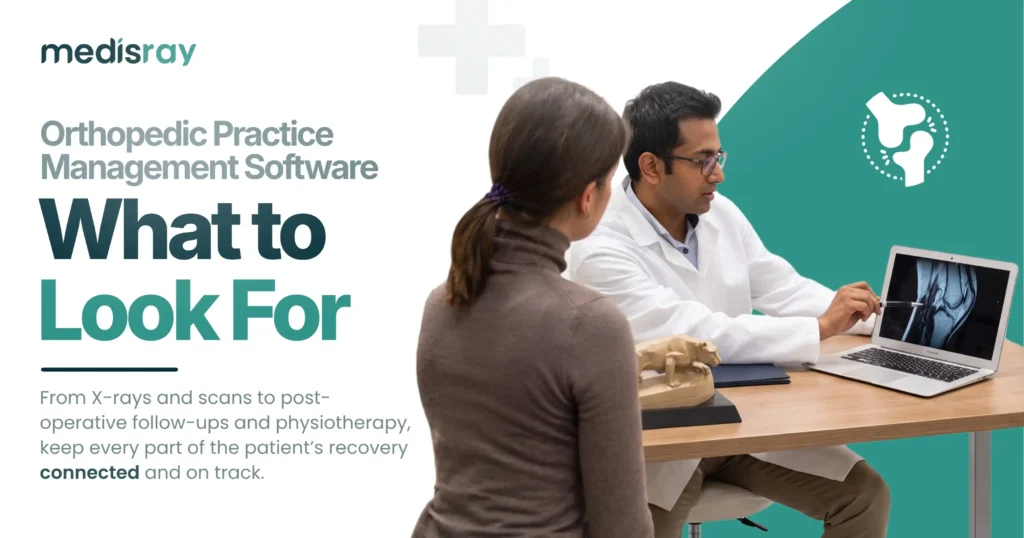
An orthopedic practice runs on images and follow-ups. X-rays and scans guide every decision, and recovery depends on patients returning for review, physiotherapy and post-operative care. So, the right orthopedic practice management software has to do more than book appointments; it has to keep imaging beside the record, track long recovery journeys, and make sure follow-ups do not slip. This guide explains what an ortho clinic in India should look for when choosing software, the features that genuinely earn their place, and the checks that separate a tool that supports your practice from one that simply stores data. The aim is a clinic where nothing about a patient’s recovery falls through the cracks.
Why Orthopedics Needs Specialised Software
Orthopedic care is a journey, not a single visit. A patient may arrive with a fracture, have imaging, undergo a procedure, and then return repeatedly for review, physiotherapy and rehabilitation over weeks or months. Generic clinic tools handle the first appointment well enough, but they struggle with the parts that define ortho work: storing and comparing imaging, tracking a long series of post-operative follow-ups, and coordinating physiotherapy. Software built with these workflows in mind keeps the whole recovery visible in one place, which is where the real value lies.
Imaging Belongs Beside the Record
More than most specialties, orthopedics lives on images. X-rays, MRIs and scans are central to diagnosis and to explaining a plan to the patient. When these are scattered across a viewer, a CD or loose films, consultations slow down and comparison becomes guesswork. Good orthopedic clinic software attaches imaging to the patient record, so you can pull up a scan instantly, compare a healing fracture across dates, and show the patient exactly what you see.
This matters for medico-legal clarity as well as convenience. When every scan is dated and attached to the record, you have a clear, ordered history of a patient’s condition and how it changed, which supports sound decisions and protects you if a case is ever reviewed. Loose films and scattered viewers cannot offer that, and reconstructing a timeline from them wastes clinic time you do not have.
Follow-Ups Are Where Recovery Succeeds or Fails
The biggest risk in orthopedic care is a patient who stops coming back. Post-operative reviews, physiotherapy sessions and rehabilitation check-ins are not optional extras; they are the difference between a good outcome and a poor one. Software that schedules these follow-ups and sends automated reminders keeps recovery on track, and flags patients who have gone quiet before a small setback becomes a big one. Our guide on reducing no-shows covers the reminder tactics that work here, where a missed review carries a real clinical cost.
The Features an Ortho Practice Really Uses
Focus on features that match the ortho journey, not a generic list.
- Imaging storage and comparison. X-rays and scans attached to the record, viewable and comparable across visits.
- Post-operative follow-up tracking. Scheduled reviews and reminders so recovery check-ins do not slip.
- Physiotherapy and rehab scheduling. Coordination of the repeat sessions that recovery depends on.
- Ortho consultation and post-op templates. Structured notes for common presentations and procedures, for fast, consistent records.
- Referral management. Clean handling of referrals to and from physiotherapists and other specialists.
- Fast documentation and reminders. Quick records and automated reminders to keep a busy clinic on time.
What to Check Before You Buy
The right questions save regret. Does the software fit an orthopedic workflow, or force a generic one? Can it store and compare imaging against the record? Does it track post-operative follow-ups and physiotherapy, not just first appointments? Is the pricing predictable rather than a rising cut of your bookings? Can you export all your data, including imaging references, whenever you want? And is support quick when something breaks mid-clinic? Answer those honestly, ideally during a trial with your own cases, and the right choice becomes clear.
Keeping a Busy Ortho OPD on Time
Orthopedic OPDs can be high volume, with patients at every stage of recovery in the same waiting room. Speed matters. Quick-loading records, ready templates for common cases, and instant access to a patient’s imaging history mean each consultation moves without a scramble, and faster patient-history access is often the single feature that keeps a busy ortho clinic running to time. The result is more patients seen well, without cutting the follow-up care that recovery needs.
Better Coordination, Better Recovery
The deeper value of orthopedic clinic software is not storage; it is coordination, and coordination is what recovery depends on. Orthopedic care often involves more than one person: the surgeon, a physiotherapist, sometimes a rehabilitation team, and the patient doing exercises at home. When everyone works from the same record, the plan holds together. The physiotherapist can see the surgeon’s notes, the surgeon can see how rehabilitation is progressing, and follow-ups are scheduled so no stage is skipped. When these live in separate books, coordination breaks, and a patient can fall between the gaps, missing a review or continuing an exercise they should have stopped.
Software that keeps imaging, notes, follow-ups and physiotherapy in one connected record closes those gaps. It also helps the patient stay engaged, because they receive reminders, understand their plan, and see their own progress, which makes them more likely to complete a long recovery rather than drift away halfway.
The Right Software Keeps Every Recovery on Track
Choosing orthopedic practice management software comes down to one question: will it keep a patient’s whole recovery visible, from the first X-ray to the last physiotherapy session? A tool that stores imaging beside the record, tracks post-operative follow-ups, and reminds patients to return does exactly that, turning a series of disconnected visits into a coordinated recovery. For an ortho practice, that continuity is not a nice-to-have; it is the core of good outcomes and a well-run clinic.
If you want orthopedic clinic software that keeps imaging, follow-ups and physiotherapy in one connected record, Medisray’s orthopedic clinic software is built for the way ortho practices actually work. Store and compare scans, schedule and remind post-op reviews, and keep a busy OPD on time, all on flat, predictable pricing with your data always yours to export. Try Medisray free or book a demo, and give every patient’s recovery the follow-through it deserves.
Frequently Asked Questions
What is orthopedic clinic software?
It is clinic software built for orthopedic practices, with imaging storage and comparison, post-operative follow-up tracking, physiotherapy scheduling, ortho templates and fast documentation in one place.
What is the best orthopedic clinic software in India?
The best fit stores and compares imaging against the record, tracks follow-ups and physiotherapy, uses ortho templates, and offers predictable pricing. Test it with your own cases before deciding.
Can orthopedic software store X-rays and MRI scans?
Yes. Good orthopedic clinic software attaches imaging to the patient record so you can view and compare scans across visits and show them to the patient during the consultation.
How much does orthopedic clinic software cost in India?
It ranges from free tiers to flat monthly plans. Flat plans such as Medisray’s currently start at Rs 999 and Rs 1,999 per month. Compare the yearly total at your real volume.
How does ortho software help with post-surgery follow-ups?
It schedules review and physiotherapy sessions and sends automated reminders, and flags patients who have missed appointments, so recovery stays on track and setbacks are caught early.
Can it manage physiotherapy and rehabilitation scheduling?
Yes. Good ortho software coordinates the repeat physiotherapy and rehab sessions that recovery depends on, alongside the main clinical record.
Can a solo orthopedic surgeon use this software?
Yes. A solo ortho practice benefits from imaging storage, follow-up tracking and reminders just as much as a larger clinic, and often more, since there is less admin support to manage the recovery journey.